Bioreactors are an important part of modern pharmaceutical and biotechnology manufacturing. They provide a controlled environment where microorganisms, animal cells, plant cells, or other biological systems can grow and produce useful products. From vaccines and therapeutic proteins to enzymes and bio-based materials, many products depend on carefully designed bioprocessing systems.
The growing demand for biological medicines and sustainable manufacturing has increased the importance of bioreactor technology. Modern systems offer precise control over temperature, pH, dissolved oxygen, agitation, pressure, and nutrient supply, helping manufacturers achieve consistent results at different production scales.
In this article, we will explore the major applications of bioreactors in pharmaceutical and biotechnology industries, their role in production, and the benefits they offer to modern bioprocessing.
What Is a Bioreactor?
A bioreactor is a specialized vessel or system designed to support biological reactions under controlled conditions. Depending on the application, it may be used for microbial fermentation, cell culture, enzyme production, or other biological processes.
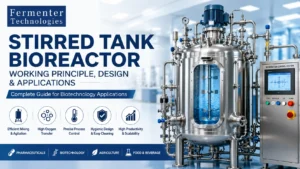
A typical bioreactor can include an agitator, temperature-control system, pH sensors, dissolved oxygen probes, aeration equipment, pumps, sampling ports, and automated control systems.
The design of a bioreactor depends on factors such as the type of organism or cells being cultivated, production volume, oxygen requirements, mixing conditions, and the final product.
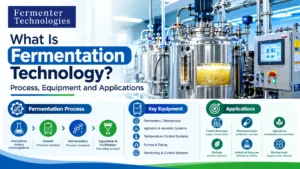
Also Read: What Is Fermentation Technology? Process, Equipment and Applications
Common types include:
- Stirred-tank bioreactors
- Single-use bioreactors
- Airlift bioreactors
- Packed-bed bioreactors
- Wave or rocking bioreactors
- Laboratory and pilot-scale bioreactors
Each design serves specific process requirements.
Major Applications of Bioreactors in Pharmaceutical Industries
The pharmaceutical industry uses bioreactors extensively for producing medicines and biological products. Controlled cultivation allows manufacturers to maintain suitable conditions throughout the production cycle.
1. Vaccine Production
One of the important bioreactor applications is vaccine manufacturing. Bioreactors can support the growth of microorganisms or mammalian cells used in the production of different types of vaccines.
The controlled environment helps maintain consistent conditions during cell growth and product formation. Parameters such as temperature, pH, oxygen, agitation, and nutrient availability can be monitored and adjusted throughout the process.
Bioreactor-based systems are particularly valuable when vaccine production needs to be scaled from research quantities to commercial manufacturing.
2. Monoclonal Antibody Production
Monoclonal antibodies are widely used in modern healthcare, including treatments for cancer, autoimmune conditions, and other diseases.
Mammalian cell cultures, particularly Chinese hamster ovary (CHO) cells, are commonly cultivated in bioreactors to produce therapeutic antibodies. The system provides controlled conditions for cell growth and protein production.
Advanced monitoring and automation also help manufacturers maintain reproducibility between production batches.
3. Recombinant Protein Production
Bioreactors are used to manufacture recombinant proteins such as therapeutic proteins, hormones, and other biological products.
Microorganisms such as bacteria and yeast, as well as mammalian cells, can be used depending on the characteristics of the desired protein. The bioreactor maintains the environmental conditions needed for efficient biological production.
This makes bioreactor technology an important component of recombinant DNA-based manufacturing.
4. Antibiotic Production
Certain antibiotics are produced through microbial fermentation. In these processes, microorganisms are cultivated in controlled vessels containing suitable nutrients.
The bioreactor helps regulate important parameters such as aeration, temperature, agitation, and pH. After fermentation, the desired compound is recovered and purified through downstream processing.
5. Cell and Gene Therapy Manufacturing
The development of advanced cell and gene therapies has created new requirements for bioprocessing equipment. Bioreactors can be used for controlled expansion of specific cell populations before further processing.
For these applications, factors such as gentle mixing, sterility, scalability, and process monitoring are particularly important.
Applications of Bioreactors in Biotechnology Industries
Beyond pharmaceuticals, bioreactors support a wide range of biotechnology processes. They allow biological organisms and cells to be cultivated under controlled and repeatable conditions.
1. Enzyme Production
Industrial enzymes are used in food processing, detergents, textiles, paper manufacturing, and many other industries.
Microorganisms can be grown in bioreactors to produce enzymes such as amylases, proteases, lipases, and cellulases. After fermentation, the enzymes are separated and purified according to the required application.
2. Biofuel Production
Bioreactors also play a role in the production of renewable fuels. Microorganisms can convert organic substrates into products such as ethanol, biogas, and other bio-based fuels.
The ability to control biological conditions makes bioreactors useful for optimizing fermentation and improving process consistency.
3. Industrial Fermentation
Industrial fermentation is one of the most established bioreactor applications. It is used to manufacture organic acids, amino acids, vitamins, enzymes, alcohols, and various other biological products.
Depending on the process, manufacturers may use batch, fed-batch, or continuous cultivation methods.
4. Food and Beverage Biotechnology
Bioreactors can support the controlled production of microorganisms and fermentation-based ingredients used in food and beverage manufacturing.
Fermentation is involved in products such as cultured dairy products, organic acids, yeast-based products, and other specialized ingredients. Controlled systems can help maintain consistent production conditions.
5. Bioplastics and Sustainable Materials
Biotechnology companies are increasingly exploring microorganisms as a source of sustainable materials. Certain microorganisms can produce biodegradable polymers and other bio-based compounds.
Bioreactors provide the controlled environment needed to grow these organisms and encourage the formation of the desired products.
Role of Bioreactor Technology in Modern Manufacturing
Modern bioreactor technology has moved beyond simple fermentation vessels. Today’s systems can incorporate sensors, automated controls, data collection, and advanced monitoring capabilities.
Important parameters commonly monitored include:
- Temperature
- pH
- Dissolved oxygen
- Agitation speed
- Pressure
- Airflow
- Nutrient concentration
- Foam formation
Automation allows operators to maintain process conditions within defined ranges and identify changes more quickly.
Single-use bioreactors have also become increasingly relevant for certain pharmaceutical and biotechnology processes. They can reduce cleaning requirements and may provide flexibility when producing multiple products or working with different production volumes.
Benefits of Using Bioreactors
The widespread use of bioreactors is supported by several practical advantages.
Controlled Processing
Bioreactors provide precise control over environmental conditions, allowing biological cultures to grow under defined parameters.
Better Process Consistency
Automated monitoring and control can help reduce variations between batches and support repeatable manufacturing.
Easy Scale-Up
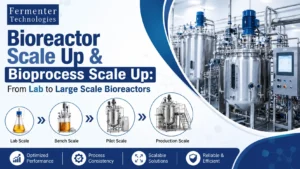
A process can often be developed at laboratory scale and then transferred to pilot and production-scale equipment after appropriate process development and validation.
Improved Productivity
Proper control of oxygen, nutrients, mixing, and other conditions can help create an environment suitable for efficient biological production.
Sterile Processing
Pharmaceutical bioreactors can be designed with features that support aseptic processing and contamination control, which are essential for many biological products.
Flexible Applications
The same basic bioreactor concept can be adapted for microbial fermentation, mammalian cell culture, enzyme production, vaccine manufacturing, and other processes.
Importance of Bioreactor Design
Bioreactor design has a direct impact on process performance. A suitable system must provide effective mixing without causing excessive stress to sensitive cells or microorganisms.
The vessel size, impeller design, aeration method, heat-transfer arrangement, sensor configuration, and control system all need to match the biological process.
For pharmaceutical and biotechnology manufacturers, choosing the appropriate equipment requires consideration of both current production requirements and future scale-up plans.
Future of Bioreactor Applications
The future of bioreactor applications is closely connected with the growth of biopharmaceuticals, personalized medicine, sustainable biotechnology, and alternative manufacturing methods.
Technologies such as single-use systems, process analytical technology, digital monitoring, automation, and improved cell-culture platforms are changing how biological products are manufactured.
As biotechnology expands into new areas, bioreactors are expected to remain an essential platform for converting biological processes into scalable commercial production.
Conclusion
The applications of bioreactors in pharmaceutical and biotechnology industries cover a broad range of processes, from vaccines, monoclonal antibodies, recombinant proteins, and antibiotics to enzymes, biofuels, food ingredients, and sustainable materials.
With precise process control, scalability, automation, and flexible configurations, bioreactors provide manufacturers with an effective platform for controlled biological production. As demand for pharmaceutical and biotechnology products continues to grow, advanced bioreactor technology will remain an important part of modern bioprocessing and industrial fermentation.
Fermenter Technologies provides bioprocessing solutions designed for laboratory, pilot-scale, and industrial requirements, helping industries implement reliable and controlled fermentation and cell-culture processes.