Fermentation is one of the most important biological processes used in the food, pharmaceutical, biotechnology, agriculture, and industrial sectors. From producing food products and beverages to manufacturing enzymes, antibiotics, organic acids, and other valuable bioproducts, fermentation plays a significant role in modern manufacturing.
But what is fermentation technology, and how does it work on an industrial scale? Fermentation technology combines microbiology, biochemical engineering, process control, and specialized equipment to grow microorganisms or cells under controlled conditions and convert raw materials into useful products.
Fermenter Technologies provides advanced fermentation and bioreactor solutions designed for laboratory research, process development, pilot-scale production, and industrial applications.
Also Read: What is a Pilot Scale Fermenter? Setup, Benefits & Industrial Uses
What Is Fermentation Technology?
Fermentation technology is the application of biological and engineering principles to control and optimize fermentation processes. It involves the cultivation of microorganisms such as bacteria, yeast, fungi, or other biological systems in a controlled environment.
The process is generally carried out inside specialized equipment such as fermenters or bioreactors, where important parameters including temperature, pH, dissolved oxygen, agitation, pressure, and nutrient supply can be monitored and controlled.
Depending on the application, fermentation technology can be used for producing:
- Enzymes
- Organic acids
- Antibiotics
- Vaccines and biological products
- Biofuels
- Probiotics
- Food ingredients
- Industrial chemicals
- Microbial biomass
The objective is to create an environment where microorganisms can grow efficiently and produce the desired product with consistent quality.
Principle of Fermentation
The principle of fermentation is based on the controlled growth and metabolic activity of microorganisms or cells. Microorganisms consume nutrients present in a prepared culture medium and convert them into biomass and desired metabolic products.
A typical fermentation process requires a suitable carbon source, nitrogen source, minerals, water, and other nutrients. Depending on the microorganism and product, oxygen may also be supplied through controlled aeration.
During fermentation, conditions such as pH, temperature, agitation, dissolved oxygen, and foam are monitored continuously. Maintaining these parameters within their required ranges helps improve microbial growth and product formation.
For industrial production, the process needs to be carefully controlled because even a small change in operating conditions can affect yield, productivity, and product quality.
Fermentation in Microbiology
Fermentation in microbiology is the study and practical use of microorganisms to carry out biochemical transformations. Microbiologists examine how microorganisms grow, metabolize nutrients, and produce useful compounds under specific environmental conditions.
Different microorganisms have different nutritional and environmental requirements. For example, yeast is widely used in processes involving alcohol and certain food products, while bacteria and fungi are used to produce enzymes, organic acids, antibiotics, and other bioproducts.
Role of Fermentation Microbiology
Fermentation microbiology connects microbiological research with controlled production processes. It helps manufacturers understand:
- Microbial growth characteristics
- Nutritional requirements
- Metabolic pathways
- Product formation
- Contamination control
- Sterility requirements
- Optimal culture conditions
This knowledge is essential when developing a fermentation process from laboratory scale to pilot and production scale.
What Is Fermentation in Food Technology?
A common question is what is fermentation in food technology? In food production, fermentation is a controlled biological process in which microorganisms transform components of raw materials into products with desirable characteristics.
Fermentation can improve flavor, texture, aroma, shelf life, and nutritional properties of various foods and beverages. Products such as yogurt, cheese, bread, fermented vegetables, and certain traditional foods rely on microbial activity during processing.
Modern food manufacturers use controlled fermentation systems to achieve greater consistency, hygiene, scalability, and process control compared with uncontrolled traditional methods.
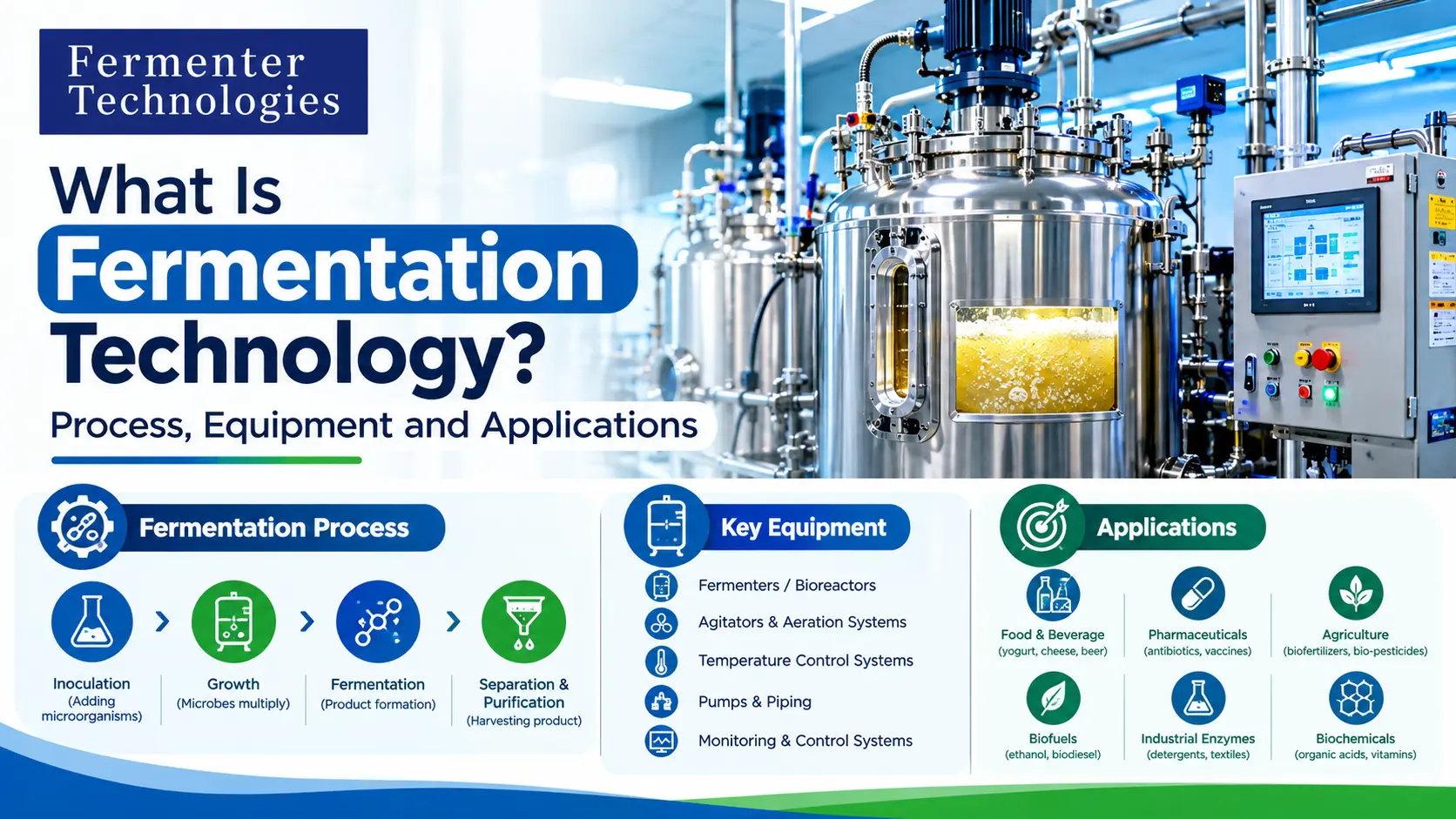
How Does a Fermentation Process Work?
A commercial fermentation process generally follows several important stages.
1. Medium Preparation
The first step is preparing a suitable culture medium containing the nutrients required by the selected microorganism. The formulation depends on the intended product and microorganism.
2. Sterilization
The culture medium, fermenter, and associated equipment are sterilized to reduce the risk of contamination. Sterile conditions are particularly important for pharmaceutical and biotechnology applications.
3. Inoculation
A carefully prepared culture, known as an inoculum, is introduced into the sterilized medium. The inoculum provides the microorganisms required to initiate the fermentation process.
4. Controlled Fermentation
The microorganisms grow and produce the desired product. During this stage, temperature, pH, agitation, aeration, dissolved oxygen, pressure, and foam are controlled according to the process requirements.
5. Monitoring and Process Control
Modern fermentation systems use sensors and control systems to monitor critical parameters. Automated controls can help maintain stable operating conditions and improve batch-to-batch consistency.
6. Harvesting and Downstream Processing
Once fermentation reaches the desired stage, the product or biomass is harvested. Further downstream processes such as filtration, centrifugation, separation, purification, concentration, or drying may be required depending on the final product.
Fermentation Equipment
Efficient fermentation requires equipment that can provide a controlled and hygienic environment for microbial or cell growth. The fermenter or bioreactor is the central component of the process.
A modern fermentation system may include:
- Stainless steel or suitable process vessel
- Agitator and impeller system
- Aeration system
- Temperature control system
- pH monitoring and control
- Dissolved oxygen sensor
- Pressure monitoring
- Foam control system
- Sampling arrangement
- Sterilization system
- Process control and automation
The equipment configuration depends on the microorganism, product, process volume, and industry requirements.
Types of Fermentation Equipment
Fermentation equipment can be designed for different stages of product development and manufacturing.
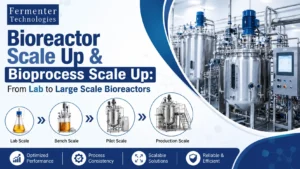
Laboratory-Scale Fermenters
Laboratory fermenters are used for research, strain development, media optimization, and process studies. They allow researchers to evaluate fermentation parameters before scaling up production.
Pilot-Scale Fermenters
Pilot-scale systems help bridge the gap between laboratory research and commercial production. They are useful for process validation, scale-up studies, optimization, and production trials.
Production-Scale Fermenters
Production fermenters are designed for larger manufacturing operations. They typically include advanced automation, process monitoring, sterilization, and control systems for reliable and repeatable production.
Applications of Fermentation Technology
Fermentation technology has applications across several industries.
Pharmaceutical Industry
Fermentation is used in the production of antibiotics, enzymes, vaccines, therapeutic proteins, and other biological products.
Biotechnology
Biotechnology companies use fermentation systems for microbial cultivation, recombinant products, enzymes, metabolites, and research applications.
Food and Beverage Industry
Controlled fermentation is widely used in dairy products, bakery products, fermented foods, beverages, probiotics, and food ingredients.
Industrial Biotechnology
Fermentation can be used to manufacture organic acids, enzymes, amino acids, bio-based chemicals, and other industrial products.
Agriculture
Microbial fermentation is also used for products such as biofertilizers, microbial inoculants, and certain biological crop-support products.
Why Choose the Right Fermentation System?
Selecting suitable fermentation equipment is important for achieving consistent process performance. Factors such as working volume, microorganism type, oxygen requirement, agitation speed, pressure, temperature range, automation level, and sterilization method should be considered before selecting a system.
Fermenter Technologies develops fermentation and bioreactor solutions for different stages of process development, from laboratory research to pilot-scale and production requirements. Properly designed systems can support process optimization, scalability, reproducibility, and efficient production.
Conclusion
Understanding what is fermentation technology involves more than simply understanding microbial fermentation. It combines microbiology, process engineering, equipment design, automation, and quality control to transform biological processes into reliable manufacturing systems.
From fermentation in microbiology and food processing to pharmaceutical and industrial biotechnology, controlled fermentation has become an essential part of modern production. With the right fermenter or bioreactor, manufacturers and researchers can develop, optimize, and scale processes while maintaining better control over critical operating parameters.
Fermenter Technologies offers fermentation and bioreactor solutions designed to support research, process development, scale-up, and commercial production. Choosing equipment based on specific process requirements can help organizations build a more controlled and efficient fermentation workflow.