Fermentation is a biological process used in biotechnology, pharmaceutical manufacturing, food production, and several industrial applications. Whether the goal is to produce enzymes, antibiotics, organic acids, biofuels, or other valuable products, maintaining suitable operating conditions is essential for achieving consistent results.
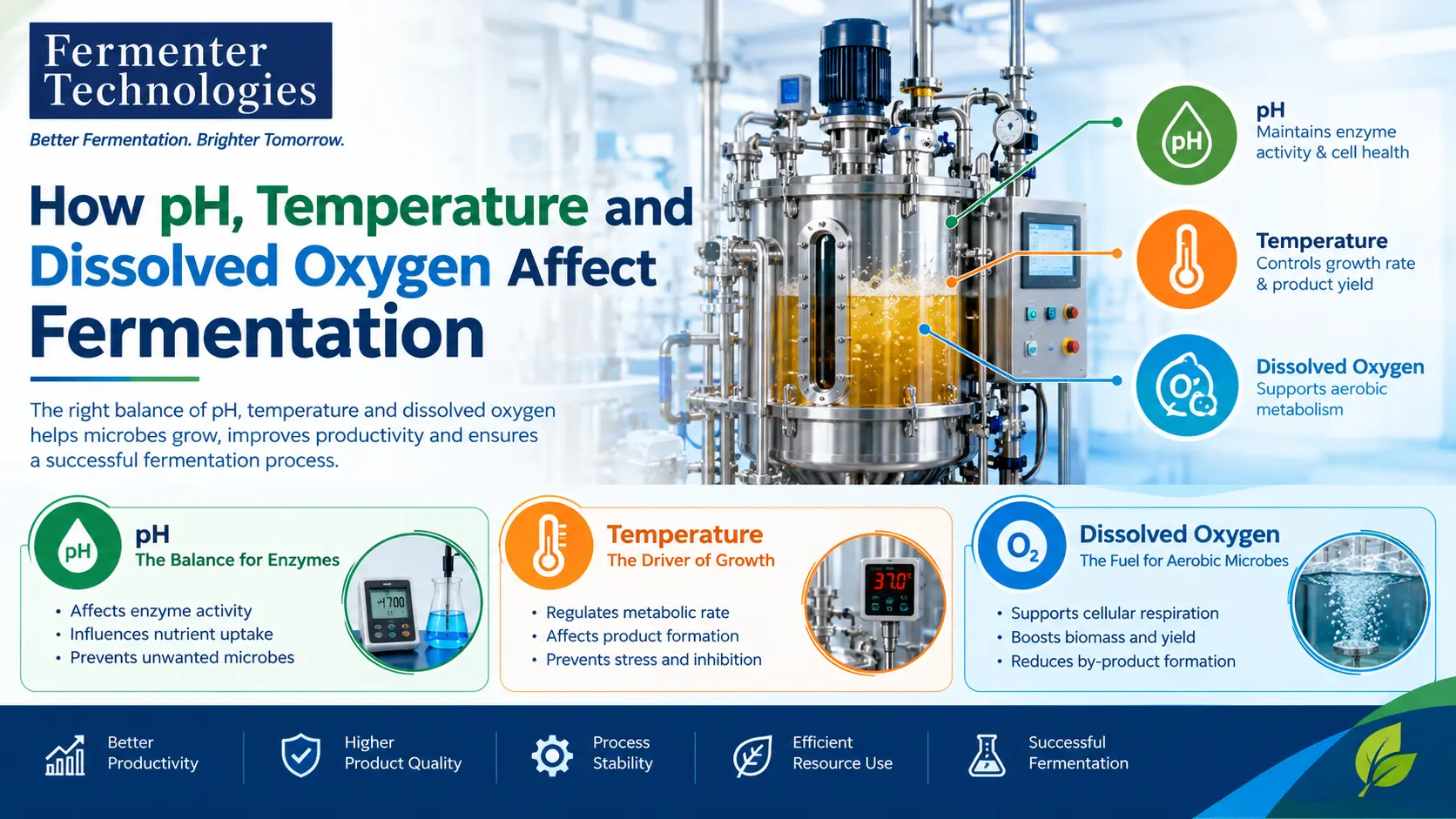
Among the most important fermentation process parameters are pH, temperature, and dissolved oxygen. These factors influence microbial growth, nutrient utilization, enzyme activity, and the rate at which microorganisms produce the desired compounds.
Even small changes in these conditions can affect fermentation performance. For this reason, modern fermenters and bioreactors are designed with monitoring and control systems that help maintain a suitable environment throughout the process.
In this blog, we will explore how pH, temperature, and dissolved oxygen affect fermentation, why their control matters, and how industries can manage these parameters effectively.
What Are the Important Parameters in Fermentation?
Fermentation depends on the interaction between microorganisms, nutrients, and environmental conditions inside the fermenter.
While several factors influence the process, three parameters require particular attention:
- pH: Measures the acidity or alkalinity of the fermentation medium.
- Temperature: Determines the thermal environment in which microorganisms grow and carry out metabolic activities.
- Dissolved oxygen (DO): Represents the amount of oxygen dissolved in the liquid medium and available to aerobic microorganisms.
These parameters are interconnected. For example, temperature can influence oxygen solubility, while microbial growth can change both pH and oxygen demand.
Understanding their combined effects is important for designing a reliable fermentation process.
Also Read: Batch vs Fed-Batch vs Continuous Fermentation: Which Process Is Better?
1. How pH Affects Fermentation
pH is one of the most important factors influencing microbial growth and product formation. It determines whether the fermentation medium is acidic, neutral, or alkaline.
Different microorganisms have different pH requirements. Some bacteria grow best under nearly neutral conditions, while certain fungi and yeast can tolerate more acidic environments.
Effect of pH on Microbial Growth
Microorganisms depend on suitable pH conditions to maintain cellular functions. When the pH moves outside the organism’s preferred range, several processes may be affected.
Changes in pH can influence:
- Enzyme activity and metabolic reactions.
- Nutrient absorption and availability.
- Cell membrane function.
- Microbial growth rate.
- Formation of the desired fermentation product.
For example, a microorganism producing organic acids may gradually lower the pH of its fermentation medium. If the acidity becomes excessive, microbial growth or product formation may slow down.
Similarly, an unsuitable alkaline environment can interfere with the metabolism of microorganisms that prefer acidic or near-neutral conditions.
Why pH Control Is Necessary
During fermentation, microorganisms consume nutrients and release metabolic products. These activities can cause the medium’s pH to change over time.
A pH control system typically uses a sensor to measure the medium’s acidity or alkalinity. If the pH moves beyond the desired operating range, the system may introduce an appropriate acid or base to bring it back toward the target.
However, pH adjustment must be carefully planned. Excessive addition of correction chemicals can increase salt concentration or affect the composition of the fermentation medium.
The ideal pH range should therefore be established through process development and validated for the specific microorganism and product.
2. How Temperature Affects Fermentation
Temperature directly influences the biological activity of microorganisms. It affects enzyme reactions, nutrient utilization, cell growth, and the formation of fermentation products.
Every microorganism has a temperature range in which it can grow and function effectively. Within that range, there is generally an optimum temperature for a particular process.
Effect of Low Temperature
When the fermentation temperature is below the preferred range, microbial activity may slow down.
This can result in:
- Slower growth and nutrient consumption.
- Longer fermentation cycles.
- Reduced product formation rates.
- Increased production time and operating costs.
Low temperature does not always reduce product quality. In some processes, a lower temperature may be intentionally used to support product stability or influence the formation of specific compounds.
The appropriate temperature depends on the desired outcome.
Effect of High Temperature
Excessive temperature can create more serious problems.
As temperature increases beyond the suitable range, enzymes may lose their normal activity, cellular structures can become damaged, and microorganisms may experience thermal stress.
High temperature can also increase oxygen demand in certain processes while reducing the amount of oxygen that can remain dissolved in the liquid.
This combination may create additional difficulties in aerobic fermentation.
Temperature Control in Fermenters
Industrial fermenters commonly use temperature sensors connected to a control system.
Depending on the equipment design, temperature can be regulated through heating elements, cooling jackets, internal coils, or external heat exchangers.
The cooling system is particularly important during active fermentation because microbial metabolism can generate substantial heat.
Maintaining a suitable temperature helps support consistent microbial activity and improves the reproducibility of fermentation batches.
3. How Dissolved Oxygen Affects Fermentation
Dissolved oxygen, commonly abbreviated as DO, is especially important in aerobic fermentation. Aerobic microorganisms require oxygen for cellular respiration and several metabolic activities involved in growth and product formation.
Dissolved oxygen refers to oxygen present in the liquid medium, rather than oxygen in the air above the fermentation broth.
Why Microorganisms Need Dissolved Oxygen
During aerobic fermentation, microorganisms use oxygen to support energy production and cellular processes.
If the oxygen supply is insufficient, the culture may experience oxygen limitation. Depending on the organism, this can slow growth, change metabolic pathways, or reduce the formation of the desired product.
For example, oxygen limitation in an aerobic microbial process may lead to changes in by-product formation or lower productivity.
However, not every fermentation process requires oxygen. Some microorganisms and products are associated with anaerobic fermentation, where oxygen must be limited or excluded.
Therefore, the required dissolved oxygen level depends on the biological process.
Factors That Influence Dissolved Oxygen
Several factors determine how much oxygen remains available inside a fermenter.
- Agitation: Impellers mix the fermentation broth and help distribute oxygen throughout the vessel. Appropriate agitation can improve oxygen transfer, although excessive agitation may damage sensitive cells.
- Aeration: Air or oxygen-containing gas is introduced into the fermenter to provide oxygen for aerobic cultures.
- Temperature: Oxygen solubility generally decreases as temperature increases. This means warmer fermentation broth may hold less dissolved oxygen under otherwise comparable conditions.
- Microbial oxygen demand: As microorganisms grow and become more active, their oxygen consumption may increase. The oxygen supply must be sufficient to meet this demand.
- Medium properties: Viscosity, foam formation, and other characteristics of the fermentation broth can influence oxygen transfer.
Maintaining Suitable Dissolved Oxygen Levels
Industrial bioreactors often use dissolved oxygen sensors to monitor oxygen availability.
The control system may adjust agitation speed, airflow, or oxygen enrichment to maintain the desired DO level.
A suitable control strategy should balance oxygen transfer with other process requirements, including power consumption, foam control, and cell sensitivity.
4. How pH, Temperature and Dissolved Oxygen Work Together
These three parameters should not be considered independently.
For example, when temperature rises, oxygen solubility may decrease. At the same time, microbial activity and oxygen consumption may change.
Similarly, microbial metabolism can produce acidic or alkaline compounds, causing pH to shift. A pH change may influence enzyme activity and alter the rate at which nutrients are consumed.
If the dissolved oxygen level becomes too low, microbial metabolism may change, potentially affecting the pH and the final product profile.
This is why fermentation process control often involves monitoring multiple parameters together rather than adjusting each one in isolation.
5. Practical Methods for Improving Fermentation Process Control
For consistent fermentation performance, industries should establish a suitable monitoring and control strategy.
Select Appropriate Sensors
Use pH probes, temperature sensors, and dissolved oxygen sensors suitable for the fermentation medium and operating conditions.
Sensors should be installed correctly and maintained according to the manufacturer’s recommendations.
Establish Process-Specific Operating Ranges
The optimum conditions for one microorganism may not be suitable for another.
Process development should determine the required pH, temperature, and dissolved oxygen ranges through laboratory testing and scale-up studies.
Use Automated Monitoring
Automated monitoring systems can continuously collect process data and alert operators when a parameter moves outside its specified range.
This helps reduce dependence on occasional manual readings and supports more timely corrective action.
Evaluate Parameters During Scale-Up
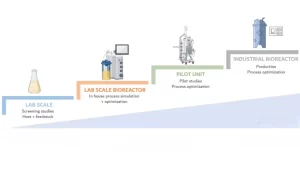
Conditions that work well in a laboratory fermenter may behave differently in a large industrial vessel.
Larger fermenters can experience differences in mixing, heat removal, and oxygen transfer. Therefore, scale-up requires careful evaluation of equipment performance and process conditions.
Conclusion
pH, temperature, and dissolved oxygen are fundamental parameters that influence microbial growth, metabolic activity, and fermentation productivity.
Maintaining suitable pH helps microorganisms function effectively, temperature control supports biological activity, and dissolved oxygen management is essential for aerobic processes.
For industrial fermentation, the most effective approach is to select process-specific operating ranges and monitor these parameters throughout the production cycle.
Fermenter Technologies supports the development and selection of fermentation equipment suited to different bioprocessing requirements. Understanding how these critical parameters interact helps manufacturers improve process consistency, optimize operating conditions, and make informed decisions about fermentation system design.