A pilot scale fermenter is an important bioprocessing system used to develop, test, and optimize fermentation processes before moving them to full industrial production. It provides a practical middle stage between laboratory experiments and large-scale manufacturing. Researchers and process engineers can use a pilot scale fermenter to study microbial growth, product formation, nutrient consumption, oxygen transfer, mixing, temperature control, and other critical parameters under conditions that are closer to commercial production.
For biotechnology, pharmaceutical, food, enzyme, and other fermentation-based industries, pilot-scale studies help reduce production risks and improve process efficiency. A well-designed system allows companies to identify potential problems early and establish reliable operating conditions before investing in a large production fermenter.
What Is a Pilot Scale Fermenter?
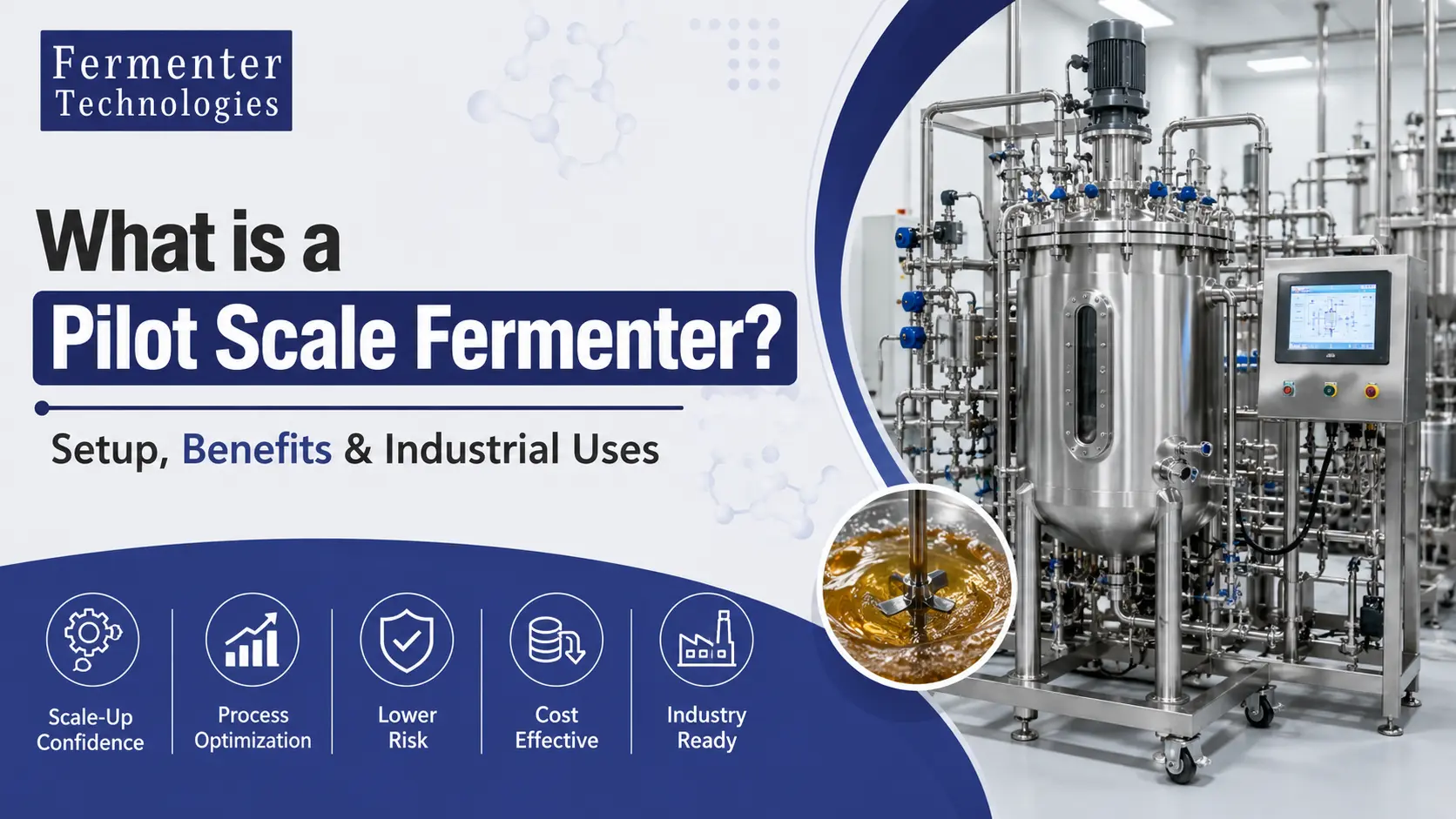
A pilot scale fermenter is a controlled vessel designed to carry out fermentation at a larger volume than laboratory-scale equipment but smaller than a commercial production system. Depending on the application, pilot systems can be designed with different working volumes, vessel configurations, agitation systems, aeration arrangements, sensors, and control options.
The main purpose of a pilot scale fermenter is process development and scale-up. It helps engineers understand how a fermentation process behaves when volume, mixing, oxygen transfer, heat removal, and other operating conditions change.
Unlike a basic laboratory fermenter, a pilot system is designed to reproduce many of the conditions encountered in industrial production. This makes it valuable for validating recipes, testing equipment settings, improving productivity, and generating data for future commercial-scale operations.
Also Read: Bioreactor Scale Up & Bioprocess Scale Up
Pilot Scale Fermenter Setup
A typical pilot fermenter setup consists of several integrated components that work together to maintain controlled fermentation conditions.
1. Fermentation Vessel
The vessel is the central component where microorganisms, cells, or other biological materials are cultivated. It is generally manufactured from suitable stainless steel materials for durability, hygiene, and easy cleaning. The vessel design depends on the process, working volume, pressure requirements, and type of product being developed.
2. Agitation System
An agitator or impeller maintains proper mixing inside the vessel. Effective agitation helps distribute nutrients, microorganisms, temperature, and dissolved oxygen throughout the fermentation medium. The agitation speed can usually be adjusted according to process requirements.
3. Aeration System
Aeration is particularly important for aerobic fermentation processes. A controlled air supply introduces oxygen into the fermentation medium through a sparger or similar arrangement. Airflow and agitation are generally optimized together to achieve the required oxygen transfer.
4. Temperature Control
Fermentation microorganisms and cells often require specific temperature conditions. Pilot fermenters therefore include heating and cooling arrangements to maintain the desired temperature throughout the process. Accurate temperature control can directly affect microbial growth and product yield.
5. pH and Dissolved Oxygen Monitoring
Modern pilot fermenters can include sensors for monitoring important process parameters such as pH and dissolved oxygen. These measurements allow operators to make controlled adjustments during fermentation and maintain the process within the desired operating range.
6. Control Panel and Automation
A control system allows operators to monitor and adjust parameters such as temperature, pH, agitation speed, aeration, pressure, and dissolved oxygen. Depending on the application, the system can range from manually operated controls to advanced automated process-control systems.
Why Is Pilot-Scale Fermentation Important?
Moving directly from a laboratory fermenter to a large industrial fermenter can create unexpected technical challenges. Conditions that work successfully at a small scale may not behave exactly the same way when the volume increases.
For example, oxygen transfer, mixing time, heat removal, foam formation, and power consumption can change significantly during scale-up. A pilot fermenter helps identify these differences before full-scale production.
Pilot-scale fermentation therefore acts as a bridge between research and manufacturing. It provides valuable process data while allowing companies to make changes without the cost and risk associated with operating a large production system.
Benefits of Using a Pilot Scale Fermenter
Better Process Optimization
A pilot fermenter allows researchers to test different operating conditions and determine the combination that delivers better productivity and consistency. Parameters such as agitation, aeration, temperature, pH, feeding rate, and fermentation time can be optimized before production.
Reliable Scale-Up Data
One of the biggest advantages is the ability to generate practical scale-up data. Engineers can study oxygen transfer, mixing behavior, heat transfer, and other process characteristics at a larger volume and use this information when designing industrial systems.
Reduced Production Risk
Testing a process at pilot scale can reveal problems before they reach commercial production. This can reduce costly failures, improve process reliability, and support smoother commissioning of larger equipment.
Improved Product Yield
Optimization of fermentation conditions can improve microorganism growth and product formation. As a result, pilot studies can contribute to better yields and more efficient use of raw materials.
Cost-Effective Development
A pilot system generally requires less material, energy, and operating cost than a full-scale production fermenter. Companies can conduct multiple experiments and modifications before committing to large-scale manufacturing.
Process Reproducibility
Pilot-scale trials help establish repeatable operating procedures. Once consistent results are achieved, these parameters can become the basis for production-scale process development.
Industrial Uses of Pilot Scale Fermenters
Pilot fermenters are used across a wide range of industries where controlled biological processing is required.
Pharmaceutical Industry
The pharmaceutical sector uses pilot fermentation systems for developing microbial and cell-based processes, including the production of various biological products, enzymes, and fermentation-derived compounds. Pilot studies help establish process parameters before commercial manufacturing.
Biotechnology Industry
Biotechnology companies use pilot fermenters to develop and optimize microbial fermentation processes. They can evaluate different strains, media formulations, feeding strategies, and operating conditions before transferring the process to a larger production system.
Food and Beverage Industry
Fermentation plays an important role in the production of products such as organic acids, fermented ingredients, cultures, and other food-related products. Pilot systems help manufacturers develop recipes and evaluate fermentation performance under controlled conditions.
Enzyme Production
Industrial enzymes are produced using microorganisms through controlled fermentation. Pilot-scale equipment enables manufacturers to optimize growth conditions and improve enzyme productivity before increasing production volume.
Biofuel and Biochemical Production
Pilot fermentation systems are also used in the development of biofuels, organic acids, biochemicals, and other fermentation-based products. They help researchers assess process efficiency and determine whether a process can be economically transferred to industrial production.
Research and Academic Institutions
Universities, research laboratories, and technology-development centers use pilot fermenters for applied research, process development, and scale-up studies. They provide a useful platform for converting laboratory findings into commercially relevant processes.
Pilot Scale Fermenter vs Laboratory Fermenter
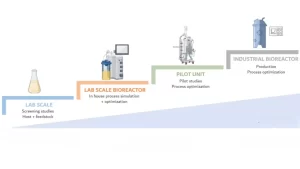
Although both systems are used for fermentation research, their objectives can differ. Laboratory fermenters are primarily used for small-scale experiments, strain screening, and initial process development. Pilot fermenters operate at a larger volume and are designed to provide data that is more representative of industrial conditions.
The pilot stage focuses strongly on process scale-up, optimization, reproducibility, and industrial feasibility. This makes it an essential step for companies planning to move from research to commercial manufacturing.
How to Choose the Right Pilot Scale Fermenter?
Selecting the right system depends on several factors, including the required working volume, type of microorganism or cell culture, aerobic or anaerobic operation, agitation requirements, oxygen transfer needs, temperature range, pressure conditions, sterilization method, and level of automation.
The fermenter should also provide suitable sampling arrangements, process sensors, cleaning provisions, and control capabilities. For industries with strict hygiene and quality requirements, the material of construction and vessel design are equally important.
It is advisable to discuss the application and expected scale-up pathway with an experienced fermenter manufacturer before selecting the equipment. The right configuration can make future transition to production scale significantly easier.
Conclusion
A pilot scale fermenter is more than simply a larger laboratory vessel. It is a critical process-development tool that helps industries understand how fermentation behaves under conditions closer to commercial production. By providing controlled mixing, aeration, temperature regulation, pH management, dissolved oxygen monitoring, and other process controls, it enables engineers to optimize processes and generate reliable scale-up information.
From pharmaceuticals and biotechnology to enzyme production, food processing, biofuels, and biochemical manufacturing, pilot fermenters support the transition from laboratory research to industrial production. Investing in a properly designed pilot fermentation system can help improve productivity, reduce development risks, and create a stronger foundation for successful large-scale manufacturing.
Fermenter Technologies provides fermentation equipment designed to support laboratory research, pilot-scale process development, and industrial applications. With the right fermenter configuration and process controls, businesses can move confidently from experimental development toward efficient and repeatable production.